Weather
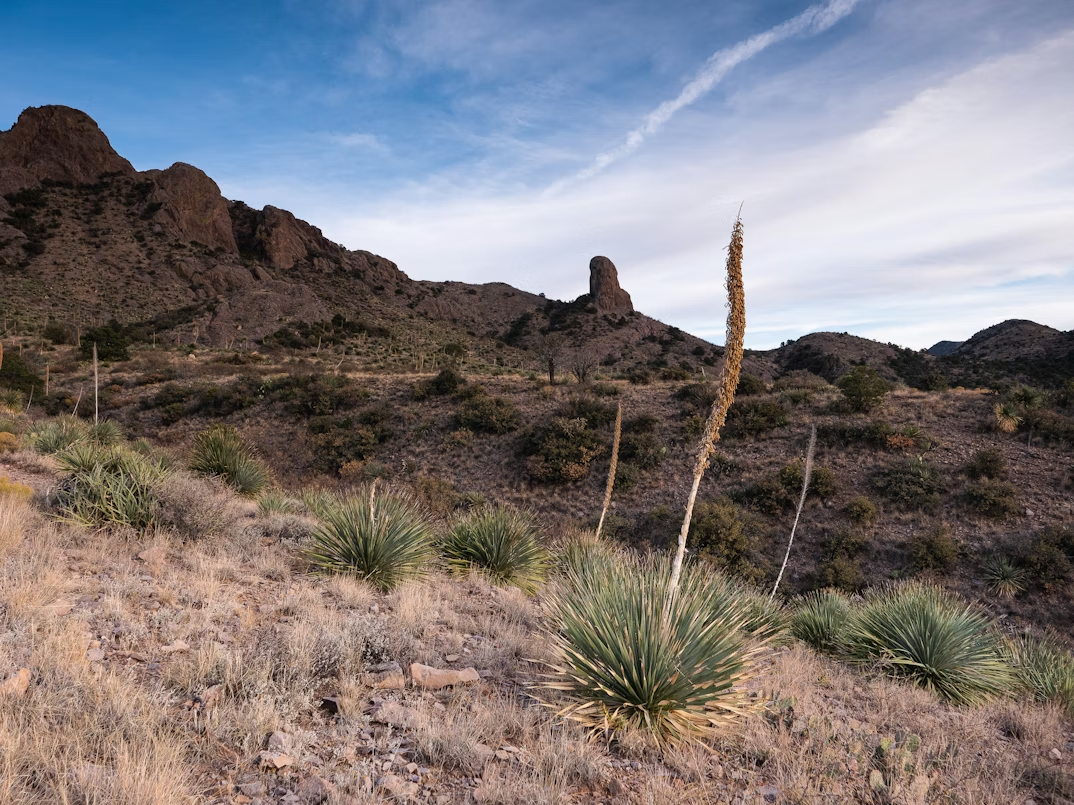
An interesting thing about the desert climate is that it has dry, hot days but it cools down considerably at night. Most people think it would be hot all of the time, but the tempature can flucuate greatly within a 24 hour period. It is important to consider the climate whenever hiking or camping especially, without proper planning it can be dangerous to be out in the elements for too long.
Since the days can be so hot and dry you can run through your water supply faster than you may think, so it's important to keep a good amount of water on hand to keep your body hydrated in the arid climate. While Las Cruces doesn't often get snow, it can drop below freezing during the winter, so warm clothing is a must if you are going to be out at night.
Average Temperature for Each Month
| Month | High(°F) | Low(°F) |
|---|---|---|
| January | 58° | 29° |
| February | 64° | 32° |
| March | 70° | 38° |
| April | 78° | 45° |
| May | 86° | 53° |
| June | 96° | 63° |
| July | 96° | 68° |
| August | 93° | 67° |
| September | 88° | 60° |
| October | 79° | 48° |
| November | 67° | 36° |
| December | 58° | 29° |
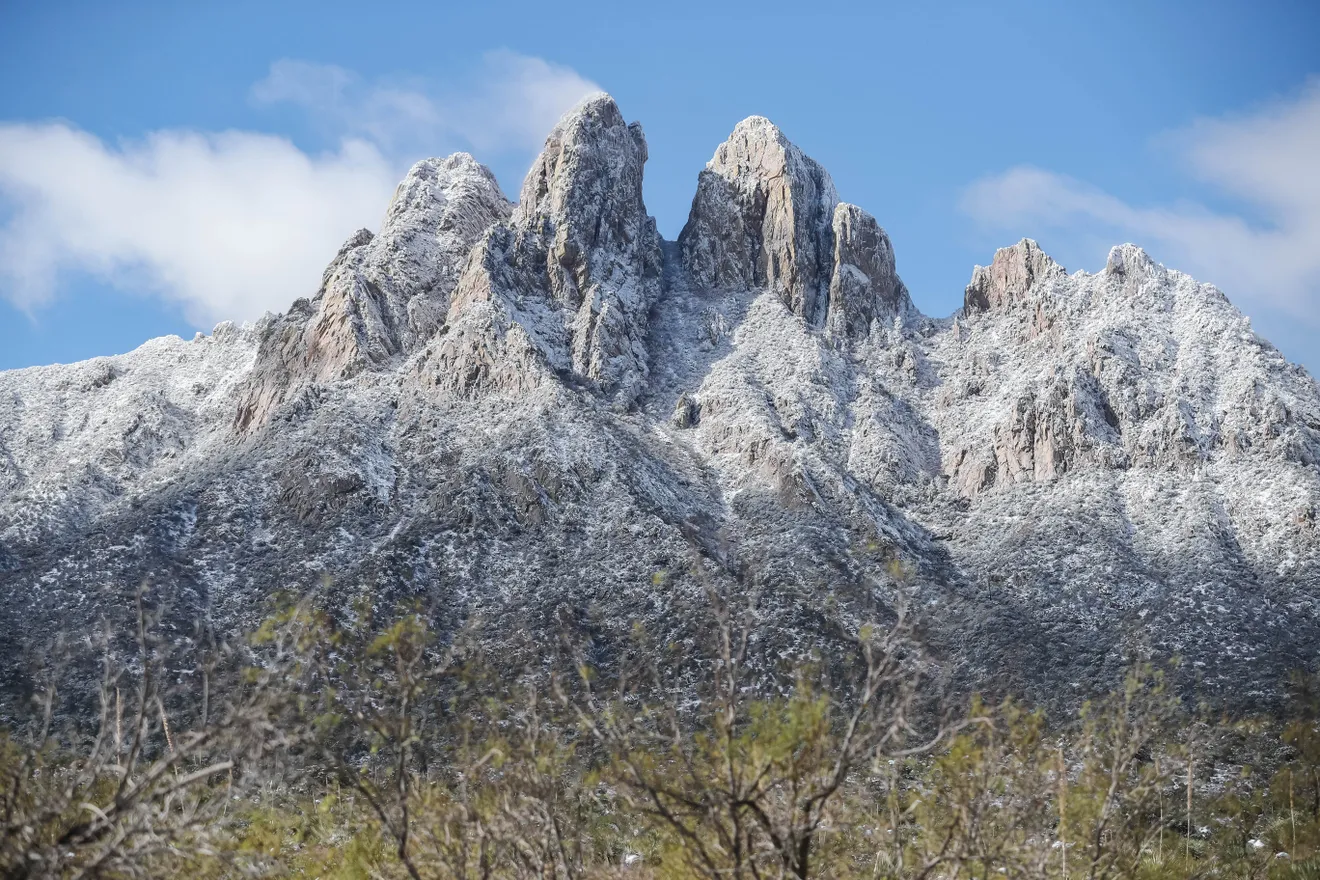
While it is uncommon for Las Cruces to receive any snow in the city, you can often see snow-capped peaks on the Organ Mountains in the winter due to the higher elevation. If you go further north in New Mexico to the Sandia Peaks in Albuquerque or the Sangre de Cristo Mountains near Angel Fire, you can even go skiing or snowboarding in the thick snow!